


-

Add: HeBei ShengShi HongBang Cellulose Technology CO.,LTD.
-

Email
13180486930@163.com -

CONTACT US
+86 13180486930



The Exploration of VAE for Dimensionality Reduction In the field of machine learning, Variational Autoencoders (VAEs) have emerged as a powerful tool for generative modeling and dimensionality reduction. VAEs are a type of neural network architecture that provides a probabilistic graphical model for data representation, enabling the capturing of intricate patterns in high-dimensional spaces. At its core, a VAE consists of two main components an encoder and a decoder. The encoder maps the input data to a lower-dimensional latent space, while the decoder generates data from this latent representation. The key aspect of VAEs is that they adopt a probabilistic approach, encoding inputs as distributions (typically Normal distributions) rather than deterministic points. This introduces a level of variability and allows for the generation of diverse outputs from a learned representation. . A crucial aspect of training VAEs is the objective function, which combines two key components the reconstruction loss and the Kullback-Leibler (KL) divergence. The reconstruction loss measures how well the output matches the input, typically using a loss function like mean squared error for continuous data or binary cross-entropy for binary data. The KL divergence, on the other hand, quantifies how closely the learned distribution approximates a prior distribution, often chosen as a standard Gaussian. This dual objective encourages both accurate data reconstruction and effective learning of the latent variable distribution. vae дахин тархах нунтаг One of the significant advantages of using VAEs for dimensionality reduction is their ability to capture complex data distributions. Traditional methods like Principal Component Analysis (PCA) often fail to capture nonlinear relationships in the data. VAEs, by leveraging deep learning, can model intricate structures more effectively, making them suitable for high-dimensional datasets such as images or complex time series. Applications of VAEs span a wide range of fields. In computer vision, they can generate new images by sampling from the latent space, making them valuable for creative tasks such as image synthesis and style transfer. In the biomedical domain, VAEs can analyze high-dimensional genomic data, identifying underlying patterns that can inform disease prediction models. Additionally, they hold promise in collaborative filtering systems, enhancing recommendations by learning user preferences in a continuous latent space. Despite their strengths, VAEs also come with challenges. For instance, one may experience the posterior collapse phenomenon, where the KL divergence becomes too small, leading the model to ignore the latent variable entirely. To mitigate this issue, various techniques have been developed, such as using more complex priors or employing hierarchical VAEs. Moreover, interpreting the learned latent spaces can be difficult due to their abstract nature. While they provide a compressed representation of the data, understanding what features or dimensions correspond to specific aspects of the data remains an ongoing research area. In summary, Variational Autoencoders represent a significant advancement in the realm of machine learning, particularly for dimensionality reduction and generative modeling. Their ability to capture the underlying structure of complex high-dimensional data makes them a powerful tool in various domains. As research progresses, improvements in architecture, training methods, and interpretability are likely to further enhance their applicability, paving the way for innovative solutions to real-world problems. The intersection of creativity and computational power that VAEs embody makes them a fascinating area of exploration in modern data science.
- 40000tons

Production
- 20+years

Experience
- 5000+㎡

Acreage

-

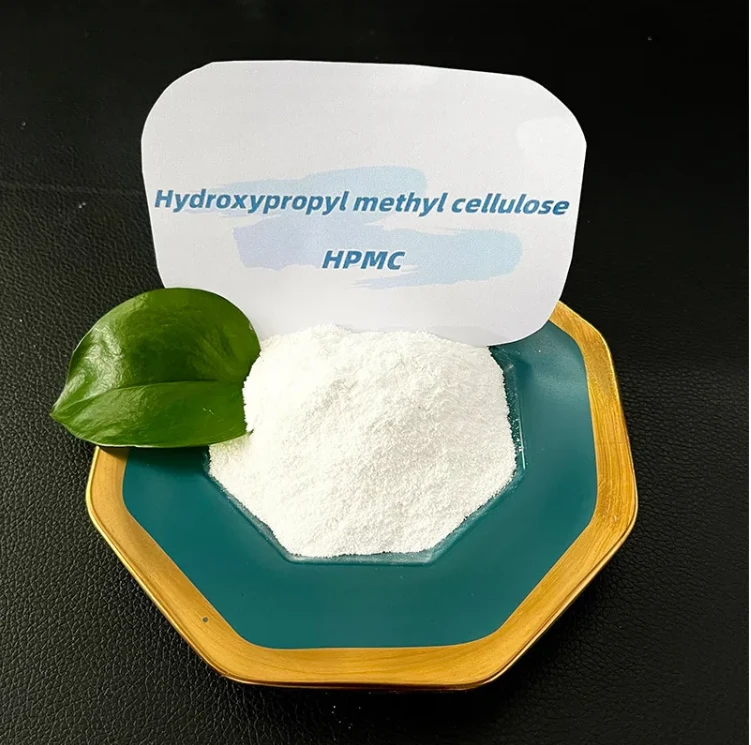
Hydroxypropyl Methylcellulose (HPMC) is an essential polymer used across various industries due to its adaptable nature and functional versatility. The complexity of its applications often warrants a closer examination of the different grades available in the market to effectively leverage their unique properties. Hydroxypropyl Methylcellulose comes in several grades, each tailored for specific functionalities. These grades differ mainly in viscosity, particle size, and substitution levels, which greatly influence their performance in diverse applications. The pharmaceutical industry extensively utilizes pharmaceutical grade HPMC as an excipient. This grade is essential in formulating controlled release drugs, offering superior stability and consistency. Real-world experiences affirm that pharmaceutical grade HPMC not only enhances the viscosity of the solution but also acts as a robust film-former, resisting degradation over time. Certified by rigorous standards, this grade showcases the crucial balance between safety and performance. In the construction industry, HPMC plays an indispensable role, particularly in tile adhesives, grout, and cement. The construction grade HPMC is distinguished by its enhanced water retention properties and workability. Construction professionals value this grade for its ability to improve open time and ensure smoother application. My long-standing interaction with industry experts revealed that the superior adhesion and cohesion provided by specialized construction grades significantly reduce sagging upon application, leading to longer-lasting structures. Food grade HPMC is another noteworthy category, primarily engaged in the food industry. This grade serves as an emulsifier, thickener, and stabilizer in various culinary applications, including plant-based alternatives. The trustworthiness of food grade HPMC is paramount as it is involved in ingestion; thus, it complies with the strictest regulatory standards. Leading food technologists often cite its non-toxic and hypoallergenic properties as pivotal when creating consumer-friendly vegan and vegetarian recipes, adding that consistent texture and mouthfeel are achieved with unmatched ease through this grade. different grades of hpmc In environmental applications, surface coating and protection measures increasingly rely on HPMC. In these contexts, specialty grades of HPMC are reputed for their biopolymer properties, offering eco-friendly yet effective solutions. These specialty grades excel in bioadhesive applications, where their performance aligns with sustainable practices. Professionals engaged in green chemistry initiatives often convey that the bio-based grades of HPMC provide not only environmental compatibility but also maintain the mechanical integrity necessary for broad-spectrum applications. Another vital domain is the personal care industry, where cosmetic grade HPMC is prevalent. It is used in lotions, creams, and shampoos as a thickening agent. Researchers emphasize the role of cosmetic grade HPMC in enhancing the viscosity of formulations, which directly relates to the product's efficacy and consumer perception. Elaborate testing and testimonies from dermatological experts underpin its safety and compatibility with skin, embodying trust and reliability in personal care products. Advanced research and development continue to forge newer grades of HPMC , tailored for high-tech applications. Engineers in the field of 3D printing, for example, are beginning to explore unique grades of HPMC with specialized rheological properties to optimize the print quality and speed, marking a testament to HPMC’s adaptability. Conclusively, the diverse grades of HPMC highlight the polymer’s intrinsic versatility across various industries. Each grade is a testament to its optimized formulation for specific applications, ensuring efficacy, reliability, and safety. These attributes not only render HPMC indispensable in existing domains but also hold the promise for pioneering applications. Considering the dynamic market demands, staying informed about the latest advancements and applications in HPMC grades is paramount for professionals keen on leveraging this polymer’s full potential for innovative solutions.
-
When weighing the benefits of HPMC (Hydroxypropyl Methylcellulose) against HEMC (Hydroxyethyl Methylcellulose), it is essential to delve into both substances' unique characteristics, applications, and roles. My insights are drawn from extensive experience in product formulation and material science. HPMC and HEMC have carved niches in various industries due to their versatile applications. Both are cellulose derivatives, commendably known for their solubility in water, non-toxicity, and biodegradability. However , their varying functionalities make them apt for specific usages. HPMC is widely acclaimed in the construction industry, serving as an excellent thickening agent, adhesive, and binder in cement and mortar applications. Its extensive use is attributed to its ability to improve workability, water retention, and bonding strength. Not only does it stabilize mixture components, but it also significantly reduces sagging in vertical applications. Such proficiency makes HPMC a preferred choice for tile adhesives, plasters, and renders. Conversely, HEMC shines prominently in the paint and coating industry. Its significant attribute is its exceptional thickening efficiency, which leads to improved application properties and ensures uniform film thickness. HEMC's modified etherification process imbues it with unique pseudoplastic and thixotropic properties, which are pivotal in providing superior stability and rheological control in paints. As a result, HEMC prevents sagging and running of paints, ensuring a smooth and even finish. A defining characteristic distinguishing HPMC from HEMC is their thermal gelation temperature. HPMC typically exhibits a higher thermal gelation temperature, which is advantageous in situations demanding hot environment stability. Therefore, for applications requiring film formation upon heating, such as in thermal bonding, HPMC is more suitable due to its consistent performance under elevated temperatures. hpmc vs hemc In pharmaceutical applications, both HPMC and HEMC find their place, though HPMC holds a dominant presence. HPMC is utilized extensively in tablet formulations as a binder, film former, and controlled release agent. Its ability to form strong, flexible films allows for the effective encapsulation of active ingredients, ensuring sustained release. The inert nature of HPMC ensures it does not interact adversely with drugs, preserving their efficacy. While HEMC is not entirely left out of pharmaceutical applications, its use is more circumspect. It finds use where specific pH sensitivity or unique viscoelastic properties are required. Additionally, in personal care products, the lower surface tension imparted by HEMC aids in the formulation of creams and lotions, providing a desirable sensory experience. The exploration of eco-friendly, sustainable solutions puts both HPMC and HEMC at an advantage due to their cellulose backbone. Nonetheless, manufacturers' choice between the two often aligns with the precise needs of the end product. Commercially, HPMC might offer broad-spectrum utility; however, HEMC’s specialization makes it indispensable in niche market segments. In conclusion, the decision between HPMC and HEMC should be informed by the specific application, consumer requirements, and desired outcome. A meticulous evaluation of their properties aligned with industry needs often informs judicious selection. As market demands evolve towards sustainability and performance, both HPMC and HEMC are positioned as integral components across industries, offering unparalleled benefits tailored to their respective roles.
advantages
-

200000 Viscosities
Excellent product
We can produce pure products up to 200,000 viscosities
-

40000 tons
High yield
We don’t stop production all year round, and the annual output can reach 40,000 tons
-

24 hours
Quality service
We provide 24-hours online reception service, welcome to consult at any time
———— Inquiry Form
Schedule A services
-
 polypropylene_fiber_for_sale
Oct . 25, 2025
The emergence of HPMC nasal spray as a potential tool in the fight against COVID-19 has garnered sig -
 hpmc_dextran_70
Oct . 25, 2025
Acrylic fiber, a synthetic fiber made from a polymer called polyacrylonitrile, offers unparalleled v -
 usos_del_eter_de_almidon
Oct . 25, 2025
Redispersible emulsion powder is a vital ingredient in modern construction materials, offering numer


